Skip to content

Art / Work

3gracias

VR painted frame by frame, on its way to the dome
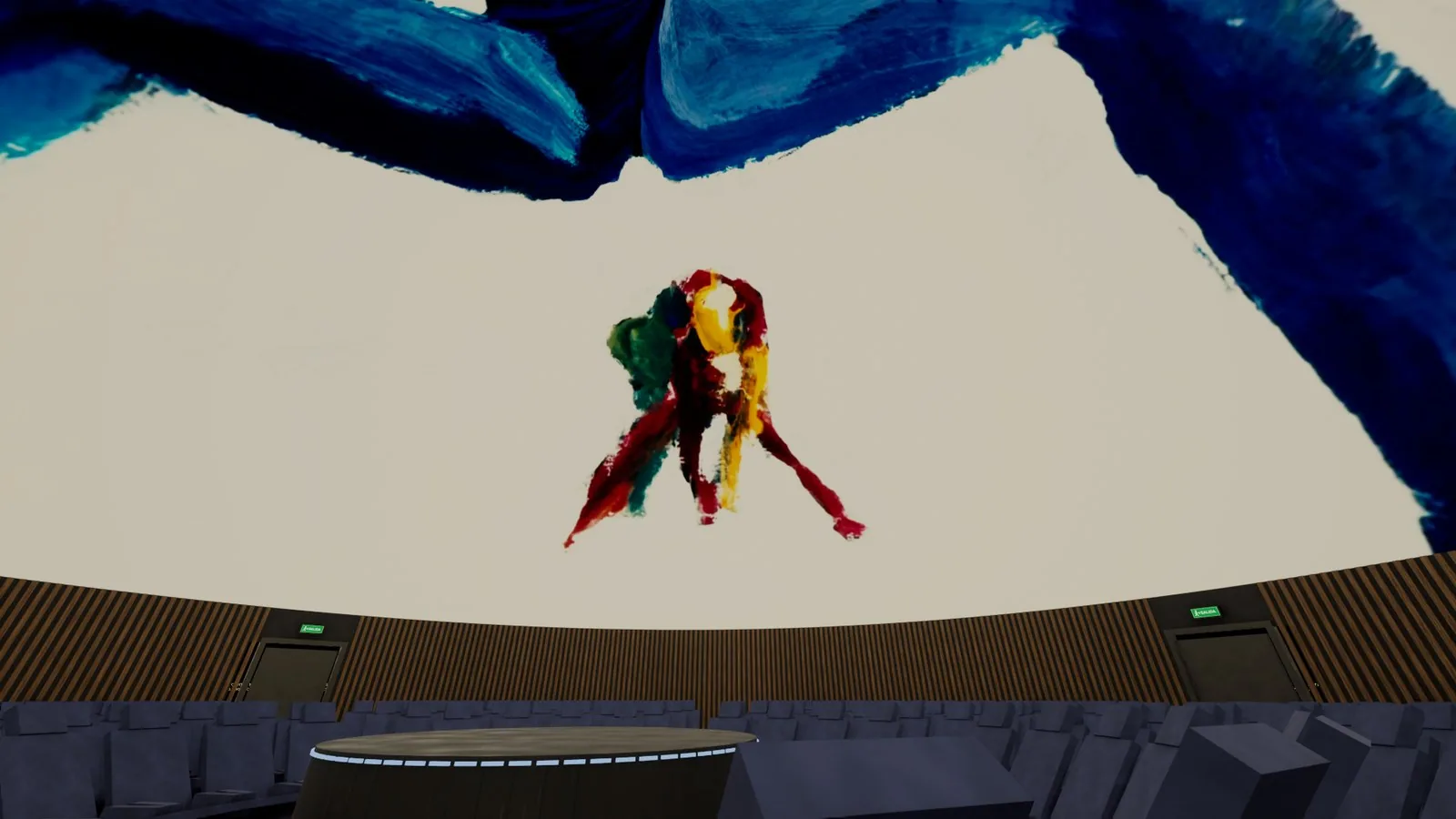
Virtual planetarium dome with figures hand-painted in red, yellow and blue on beige paper, seen from the theater's blue seats
Year
2019–2026
Role
Script, logic and process organization
With
RecLab
Tools
acrylics, scanning, 360 cameras, After Effects, Premiere Pro, Photoshop, TouchDesigner, Unreal Engine
Links
Dome system (domo-lab on GitHub)

What it is

It started as a virtual reality work painted frame by frame with physical acrylics, then scanned and composited digitally. The first stage began in March 2019 with RecLab; we are now adapting and editing it directly for dome format.

There was no software beyond the usual: scanning the paint on paper and recording with 360 cameras, and from there to compositing and spatialization.

How it is painted

First we recorded three dancers with a 360 camera (the earliest takes are from 2018).

In March 2019 the physical painting and rotoscoping began. The script is a table with the timecode of each section: breathing mountains, hints of bodies, bodies that recognize each other, solos. For each section it sets what gets printed, what becomes a loop and where the space warps.

Each frame is printed on paper with registration marks. On top of it we paint with acrylic and oil pastel. Then it is scanned at high resolution and mounted again on the 360 canvas. Before painting the sequence there is a color script: one painting per section to set the palette. The original scans run from 2019 to 2020, organized by scene: Mountains, Hints of bodies, Bodies, First solos, Second solos and New mountain.

The edit was done in After Effects and Premiere, trying three methods of interpolating between frames: frame blending, sampling and optical flow.

In the dome and where it stands

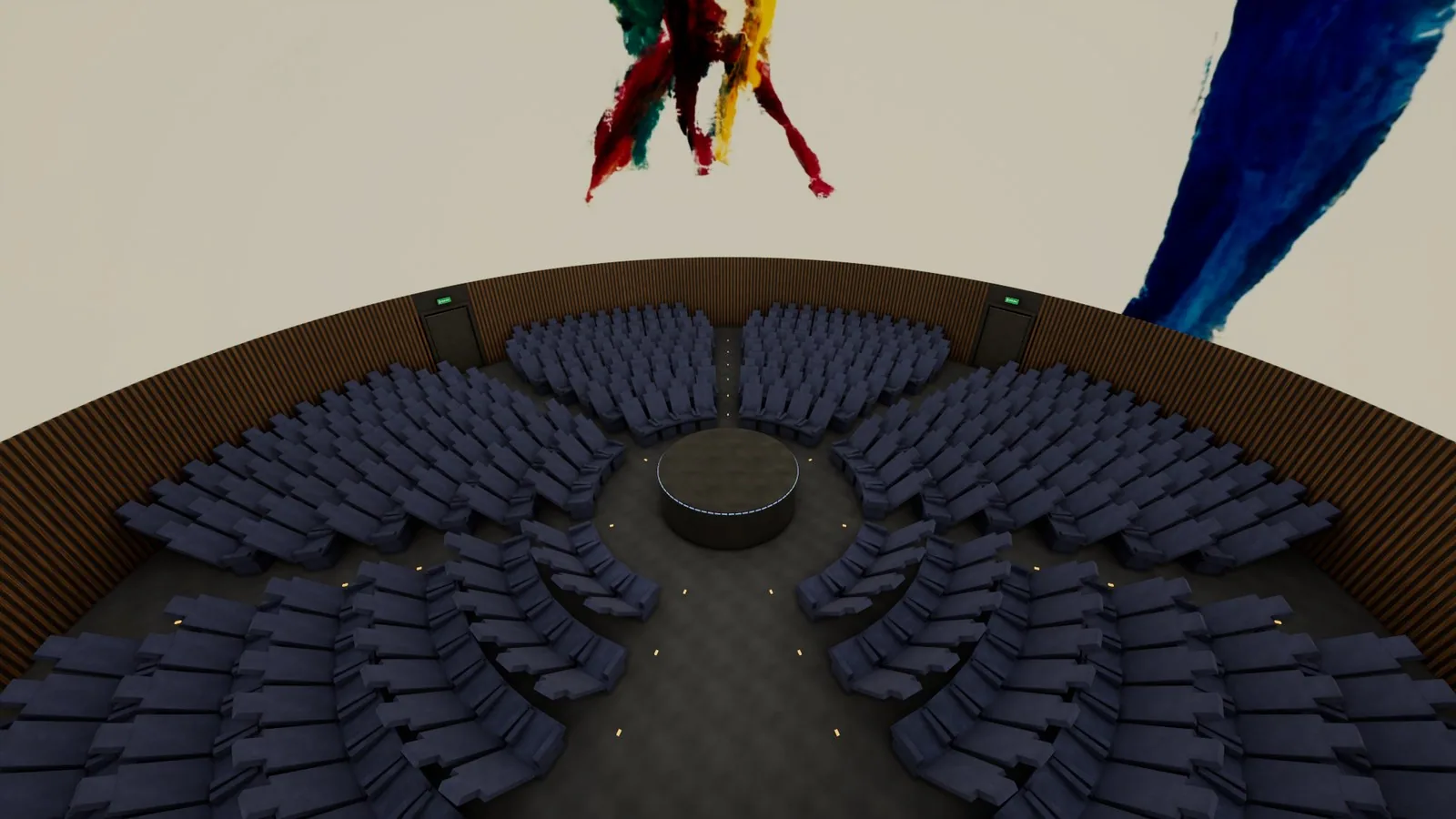
The dome tests run the hand-painted animation through the domo-lab pipeline in TouchDesigner and are viewed in the virtual planetarium theater in Unreal Engine 5.8. That is how we check framing, horizon and proportions before projecting in a real theater.

The work is being actively adapted with RecLab. Expected premiere: December 2026.

Gallery
Virtual planetarium dome with figures hand-painted in red, yellow and blue on beige paper, seen from the theater's blue seats
The animation in the virtual planetarium theater, seen from the seats.
Overview of the virtual theater from above: blue seats in wedges around a stage, a wall of wooden slats and the painting projected on the dome
Overview of the theater.
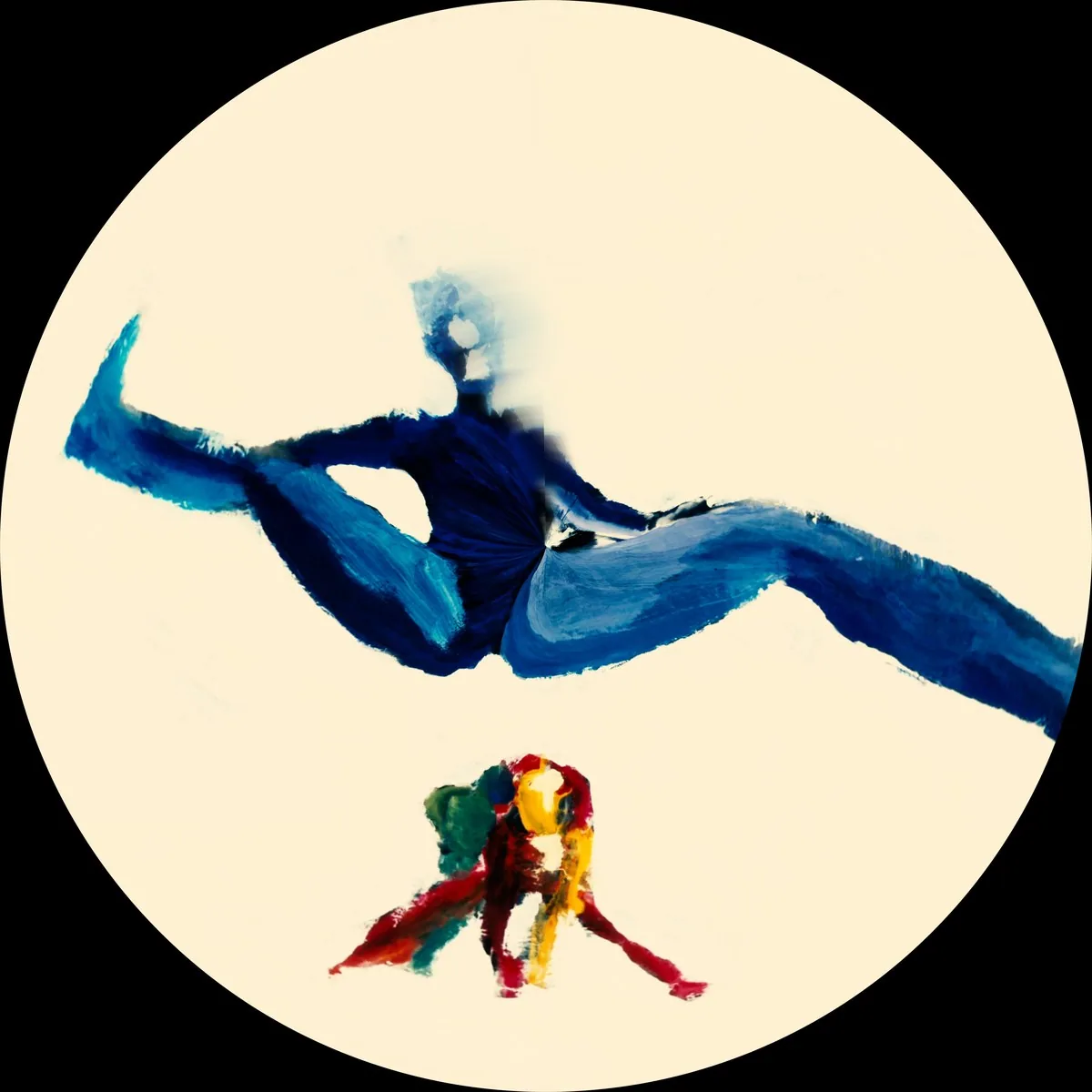
Circular domemaster of the painted animation, with the zenith at the center
The same frame as a domemaster, the format the dome projector takes.
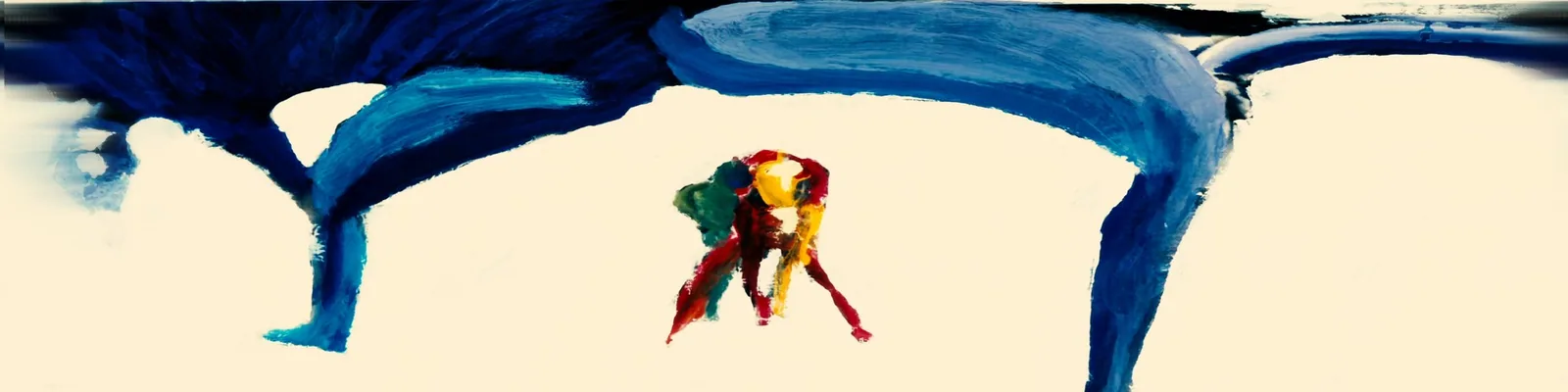
Equirectangular 360 frame of the hand-painted animation
The source 360 frame, before it goes to the dome.
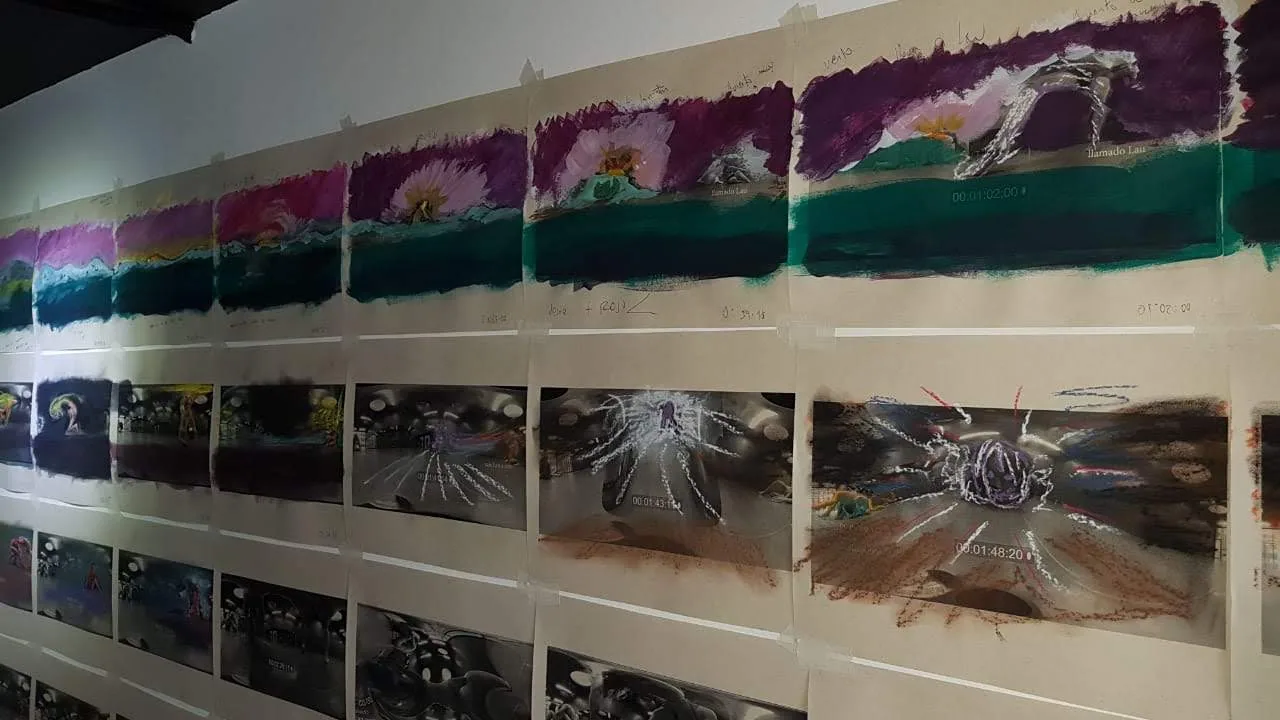
Wall in the painting studio covered with dozens of printed frames painted in acrylic, taped up in sequence with notes
Working wall in the studio (May 2019): complete sequences of hand-painted frames before scanning.
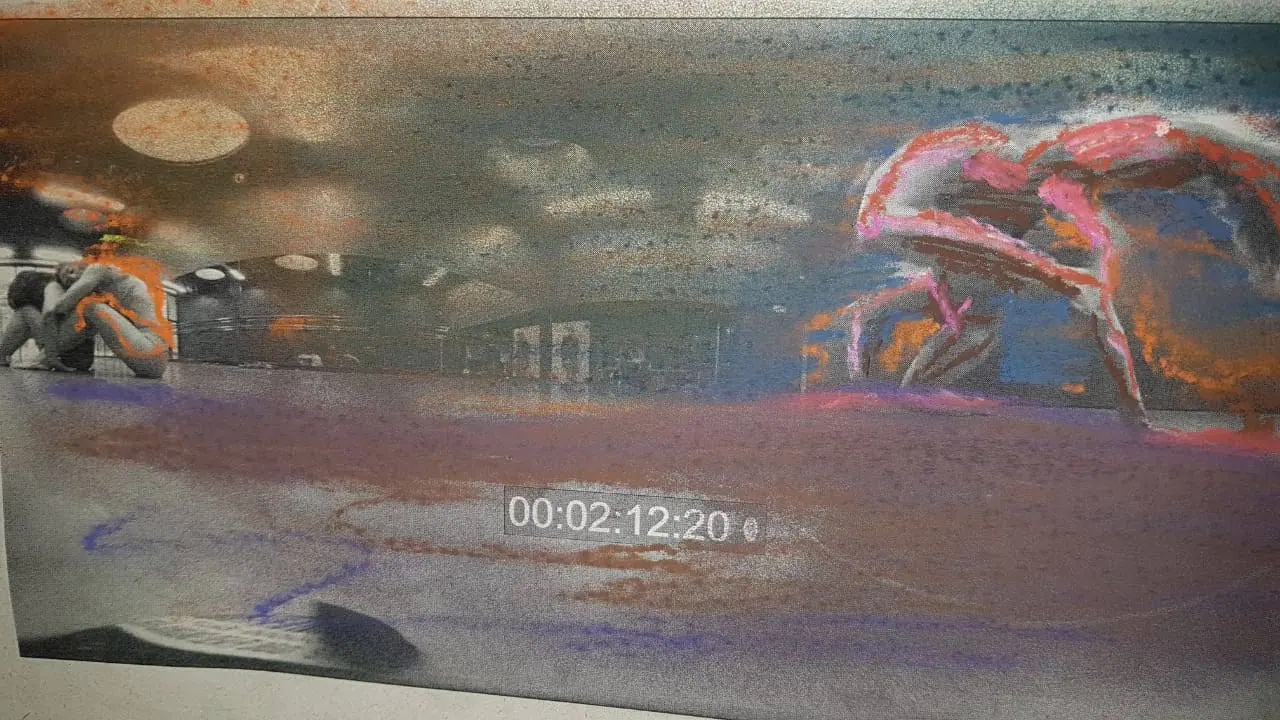
Frame painted in acrylic and chalk over a 360 photographic print, with timecode 00:02:12:20
Frame at 00:02:12:20: paint over the print of the rehearsal room (May 2019).
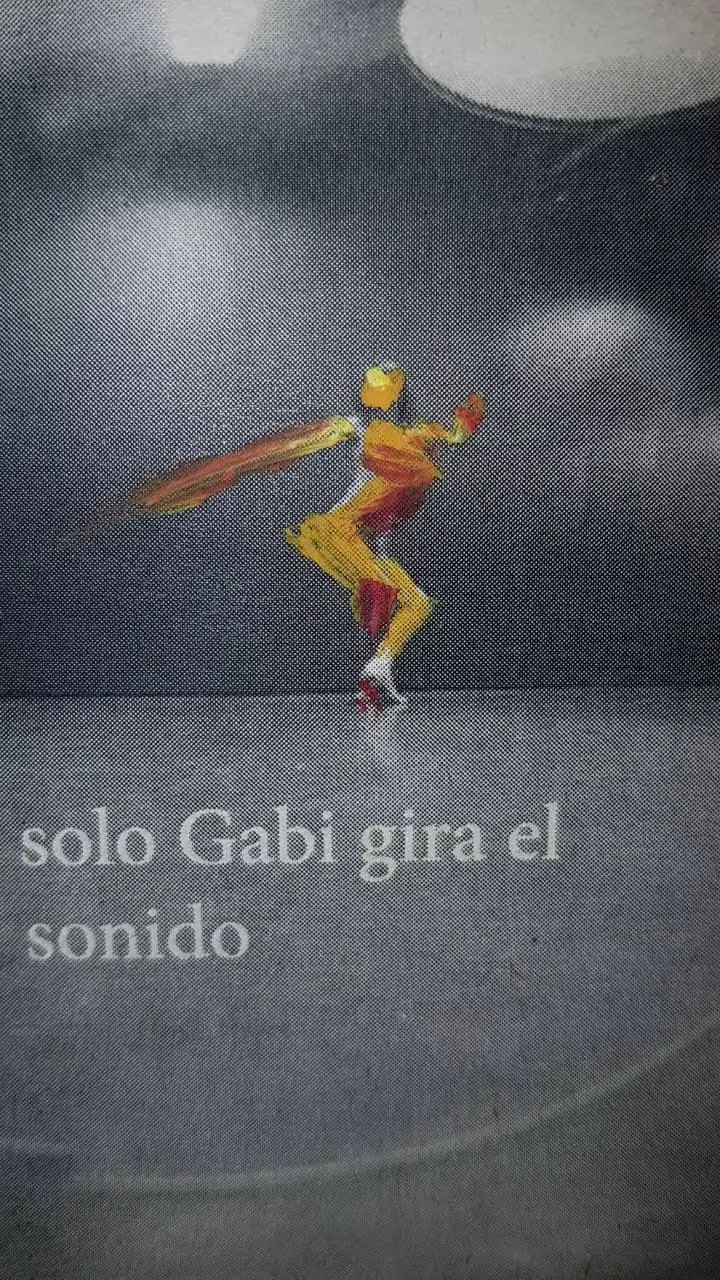
Detail of a rotoscoped dancer painted in yellow and red acrylics on printed paper, with the note 'solo Gabi gira el sonido' (only Gabi turns the sound)
Process note on the printed sheet: «solo Gabi gira el sonido», only Gabi turns the sound (May 2019).
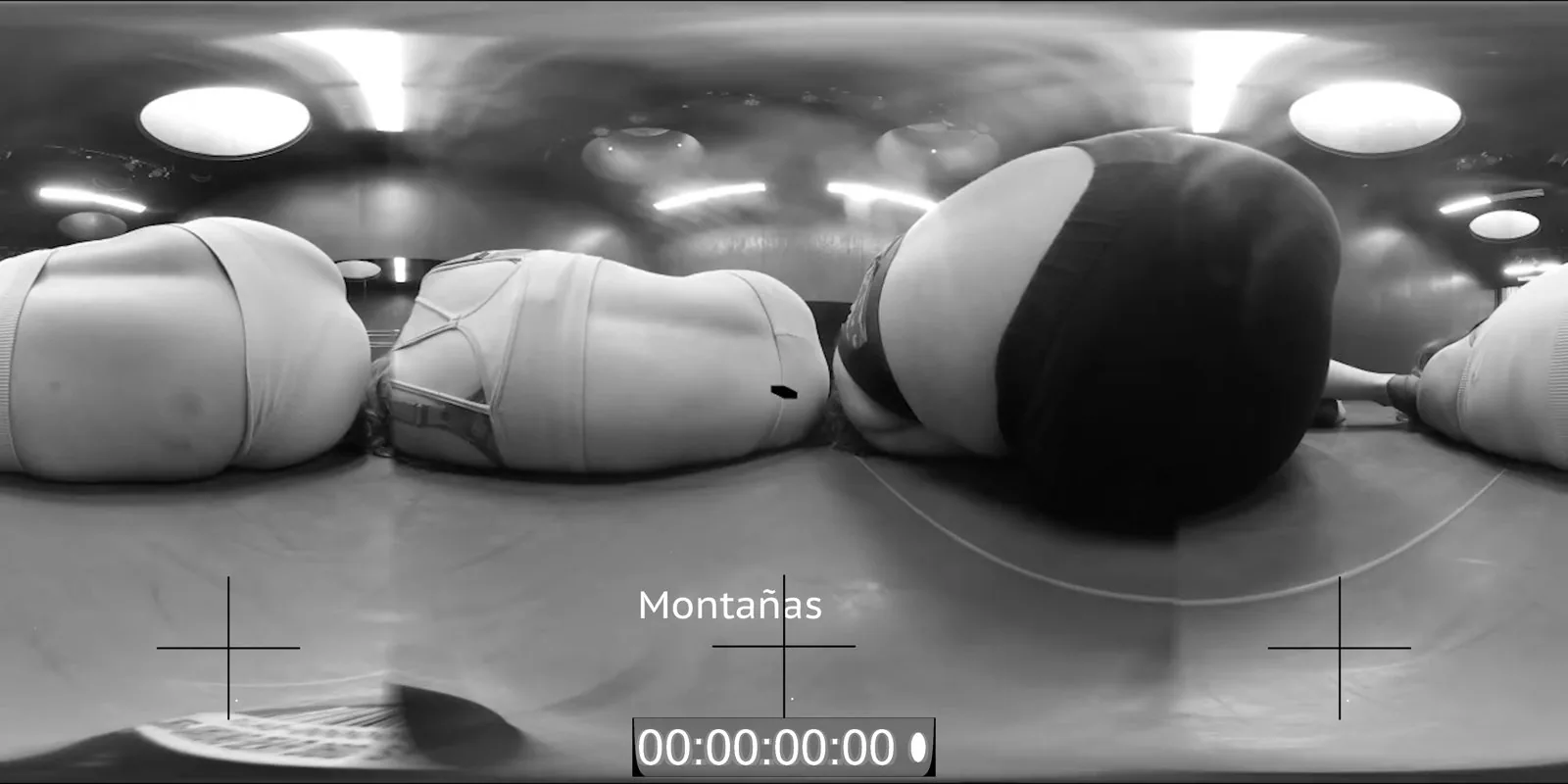
Black-and-white 360 frame of a rehearsal room: three bodies lying in the foreground, registration marks and the label Montañas with its timecode
The starting plate: the 360 frame from the recording, in gray with registration marks, ready to print and paint over.
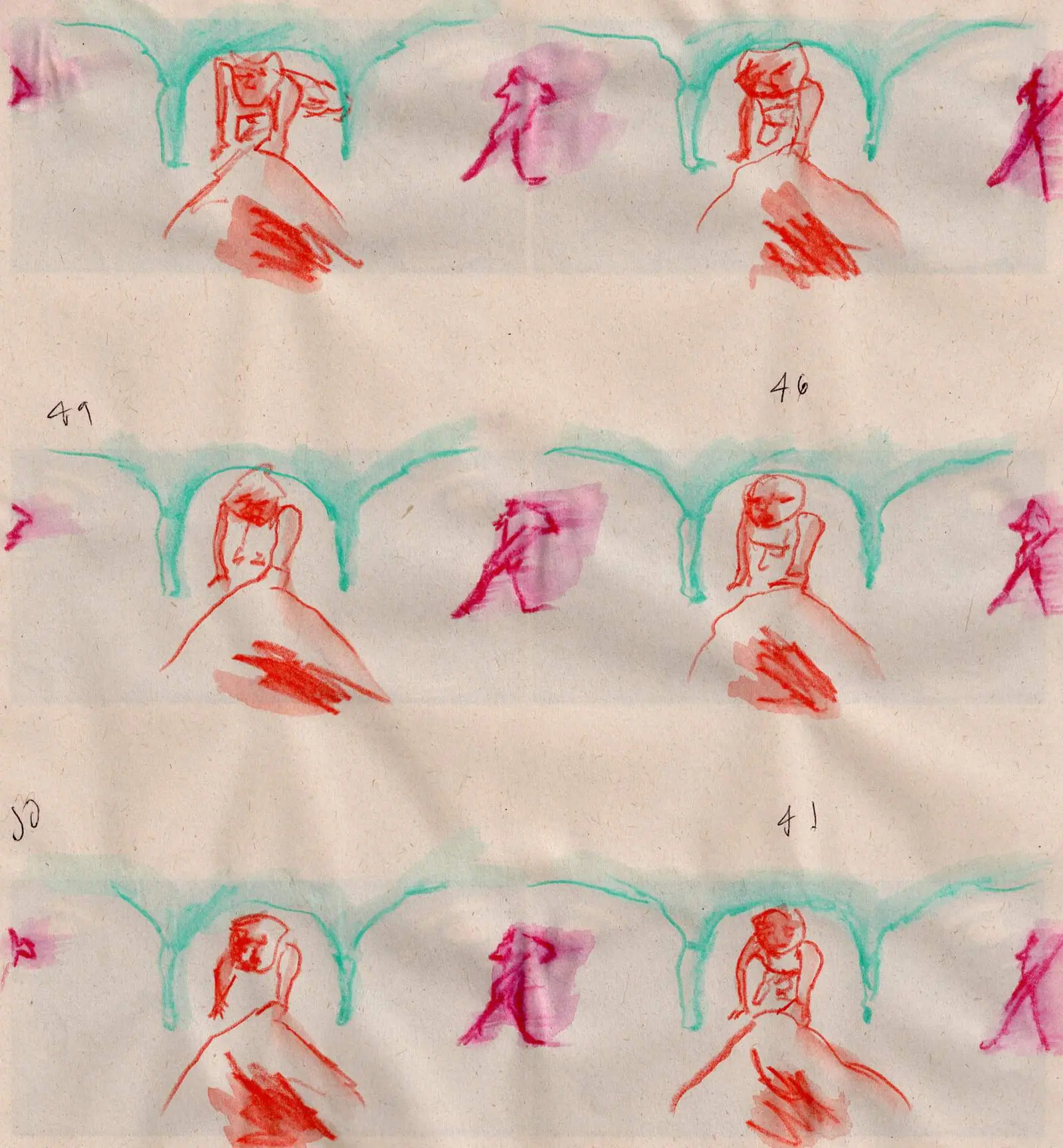
Sheet of paper with twelve numbered sketches in red, pink and aqua green: rotoscoped figures repeated with small changes
Numbered rotoscope sketches, one sheet for several frames of the loop.
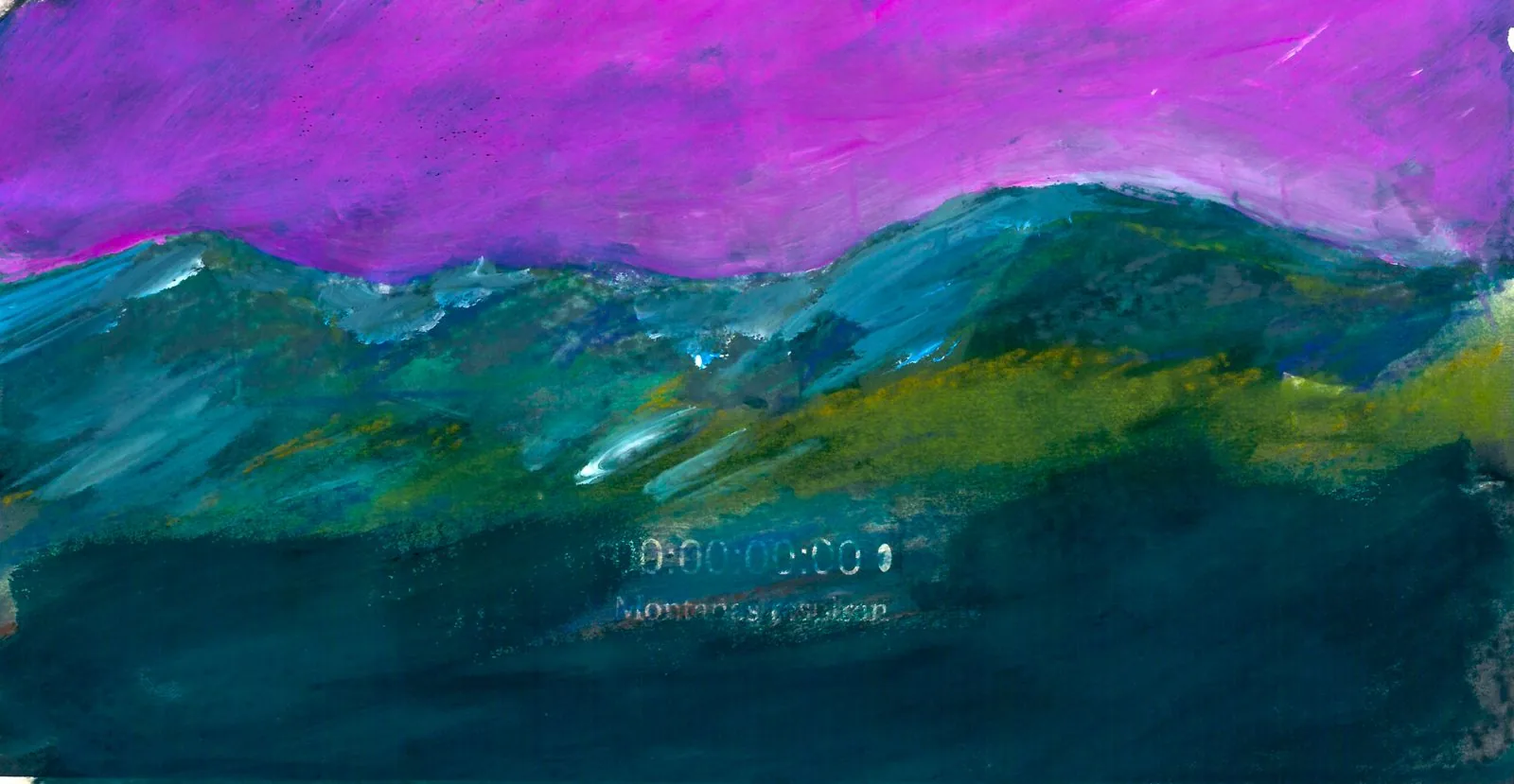
Acrylic painting of blue-green mountains under a violet sky, with the timecode of the first frame
Color script: one painting per section to set the palette before painting the sequence.
Scan of a frame painted in acrylic: four green hills under a purple sky, in 2:1 panoramic format
Mountains. Each frame is hand-painted over the print and scanned.
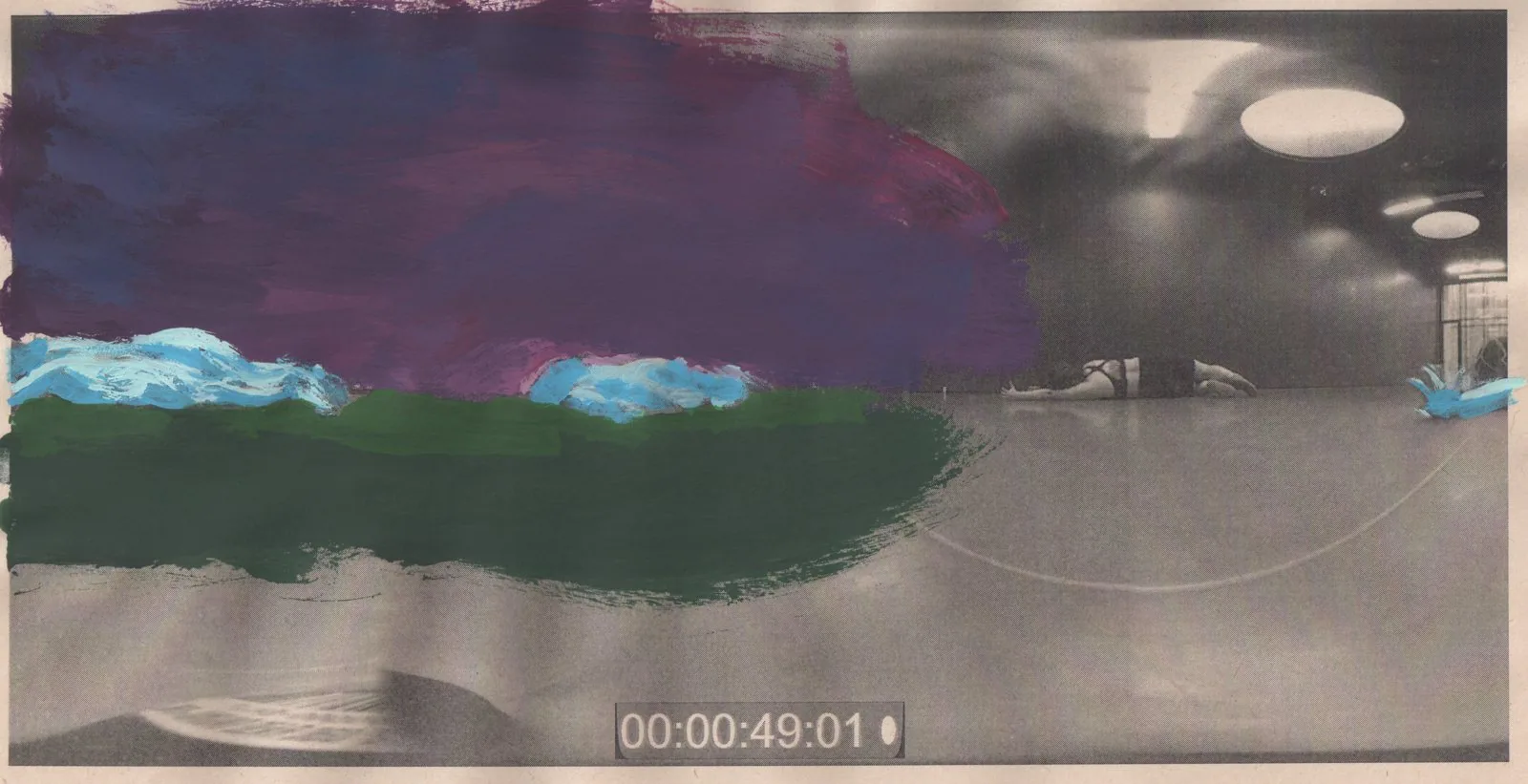
Scan of a frame: the left half painted with a violet sky, light-blue mountains and green ground; the right half shows the gray 360 photo of the room
Bodies. The paint covers the print in parts: the rehearsal room still shows underneath.
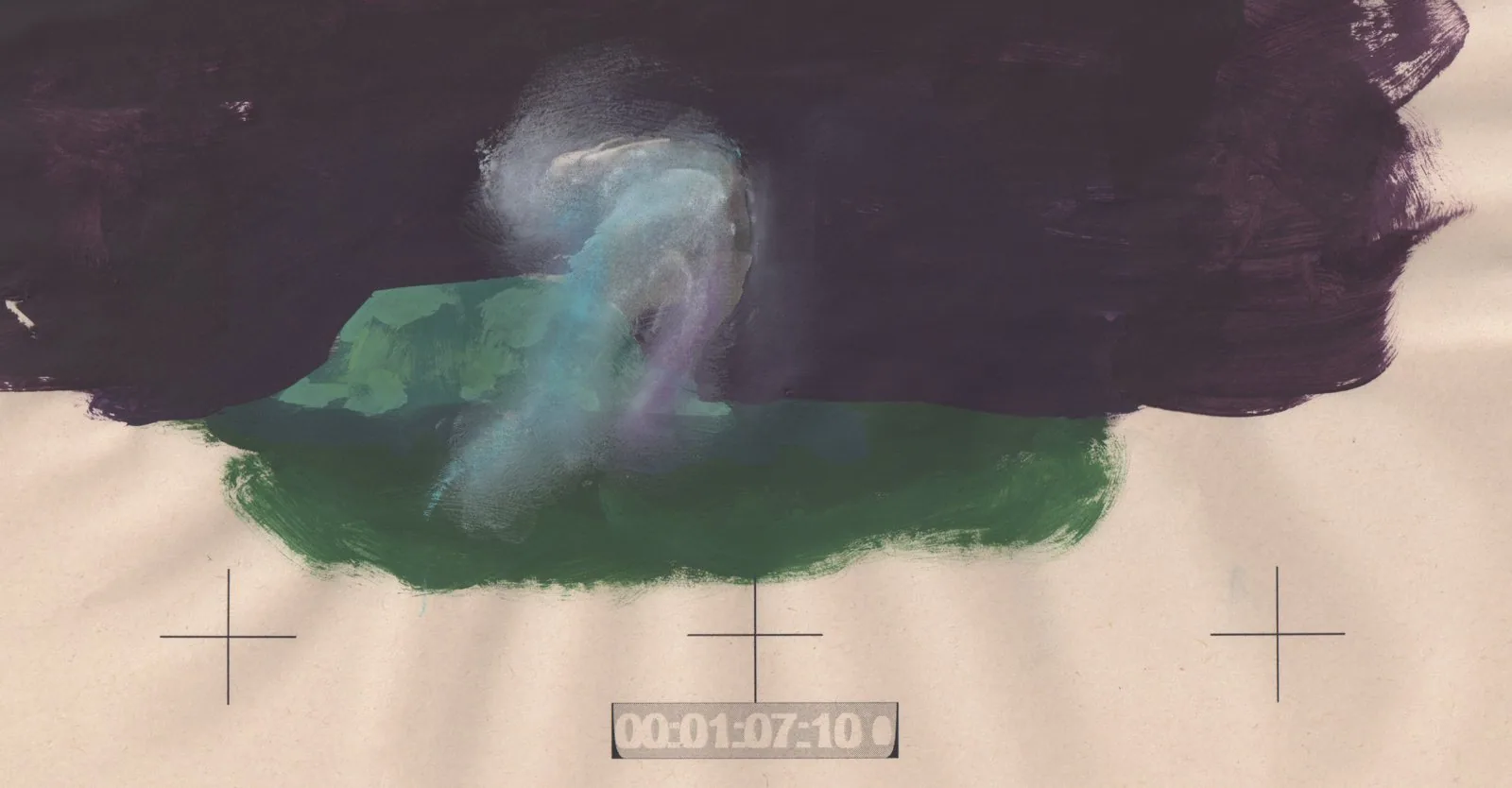
Frame painted on paper: a dark violet patch with a white and light-blue figure made of twisting strokes, and registration marks
Second solos. The body comes apart into strokes; the marks are there to line up each sheet again.
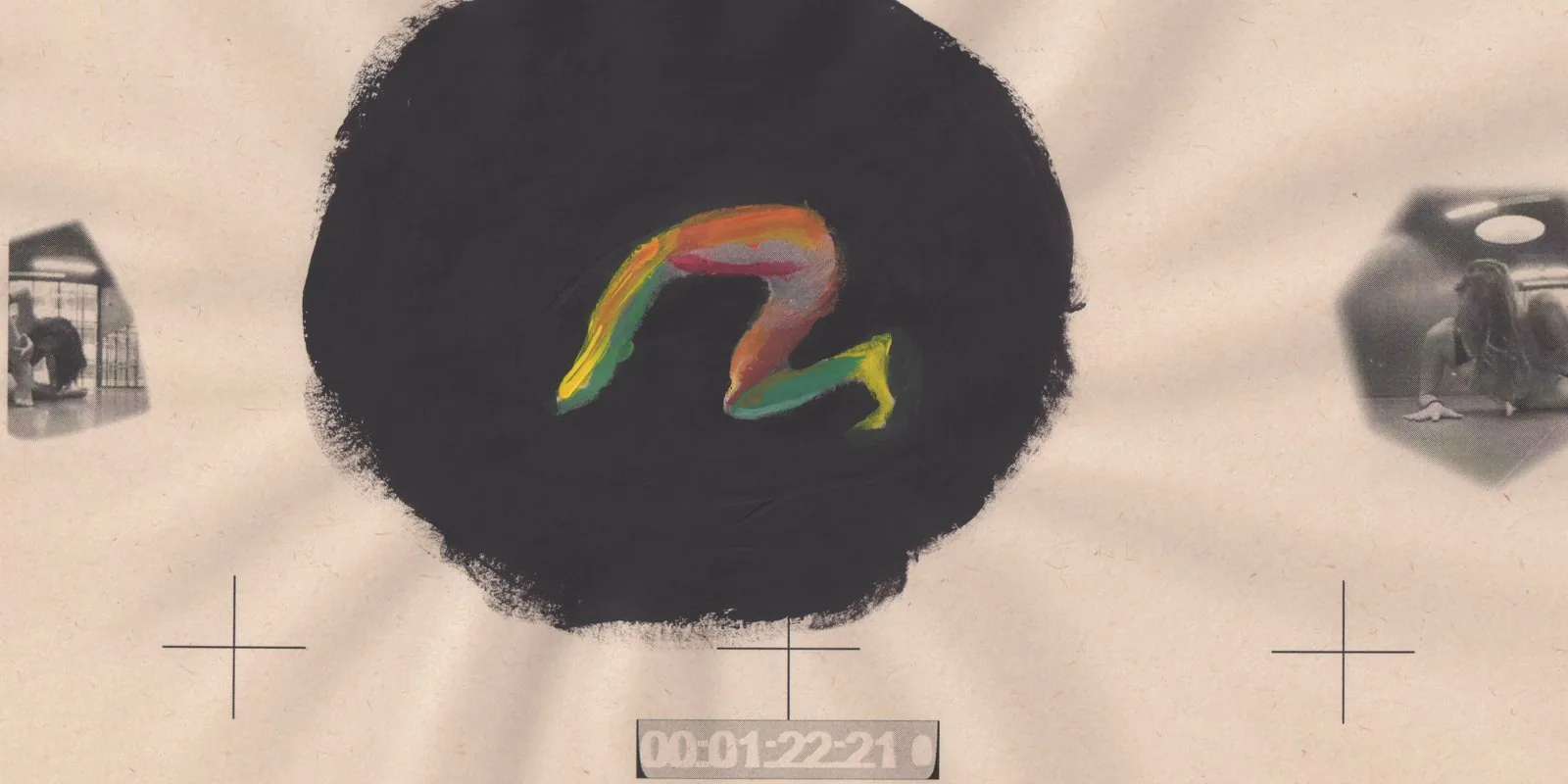
Painted frame: a black circle in the middle of the paper with a curved, brightly colored figure inside
New mountain. A solo: the figure isolated inside a painted circle.
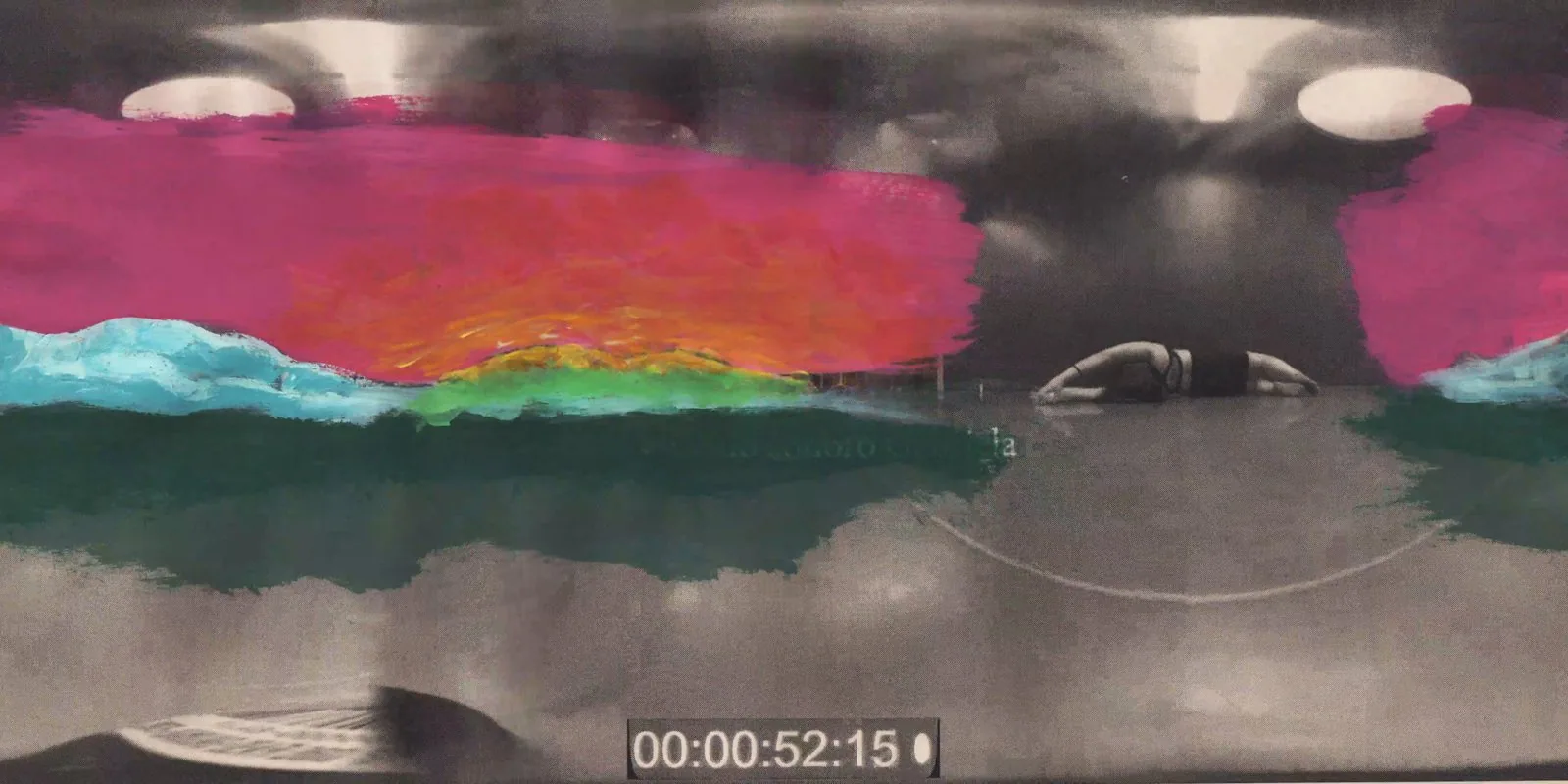
Composited 360 frame: a pink and orange sky painted by hand over the gray photo of the rehearsal room, with light-blue mountains on the horizon
The scans put back into the 360: painting and recording in the same frame.
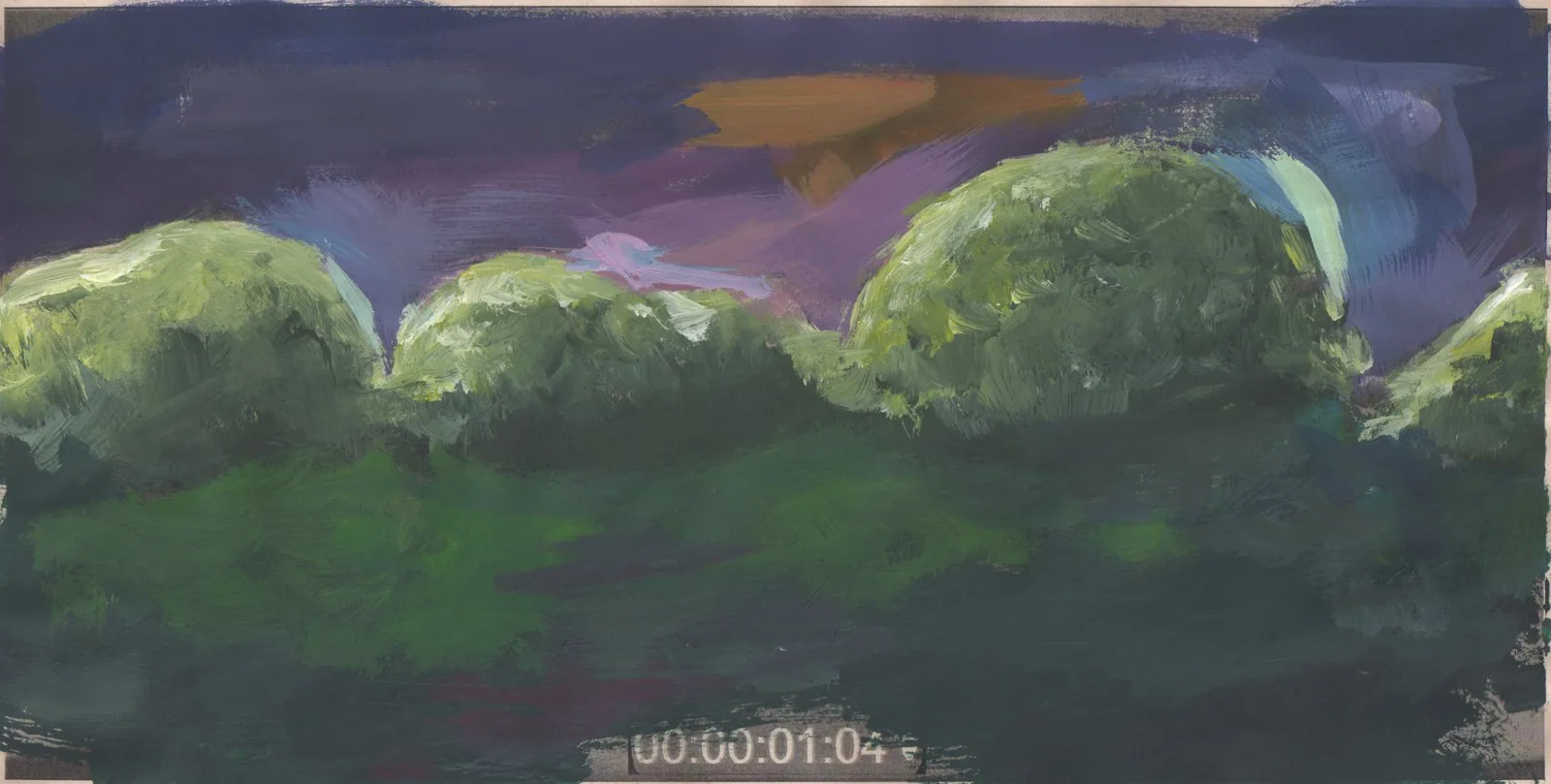
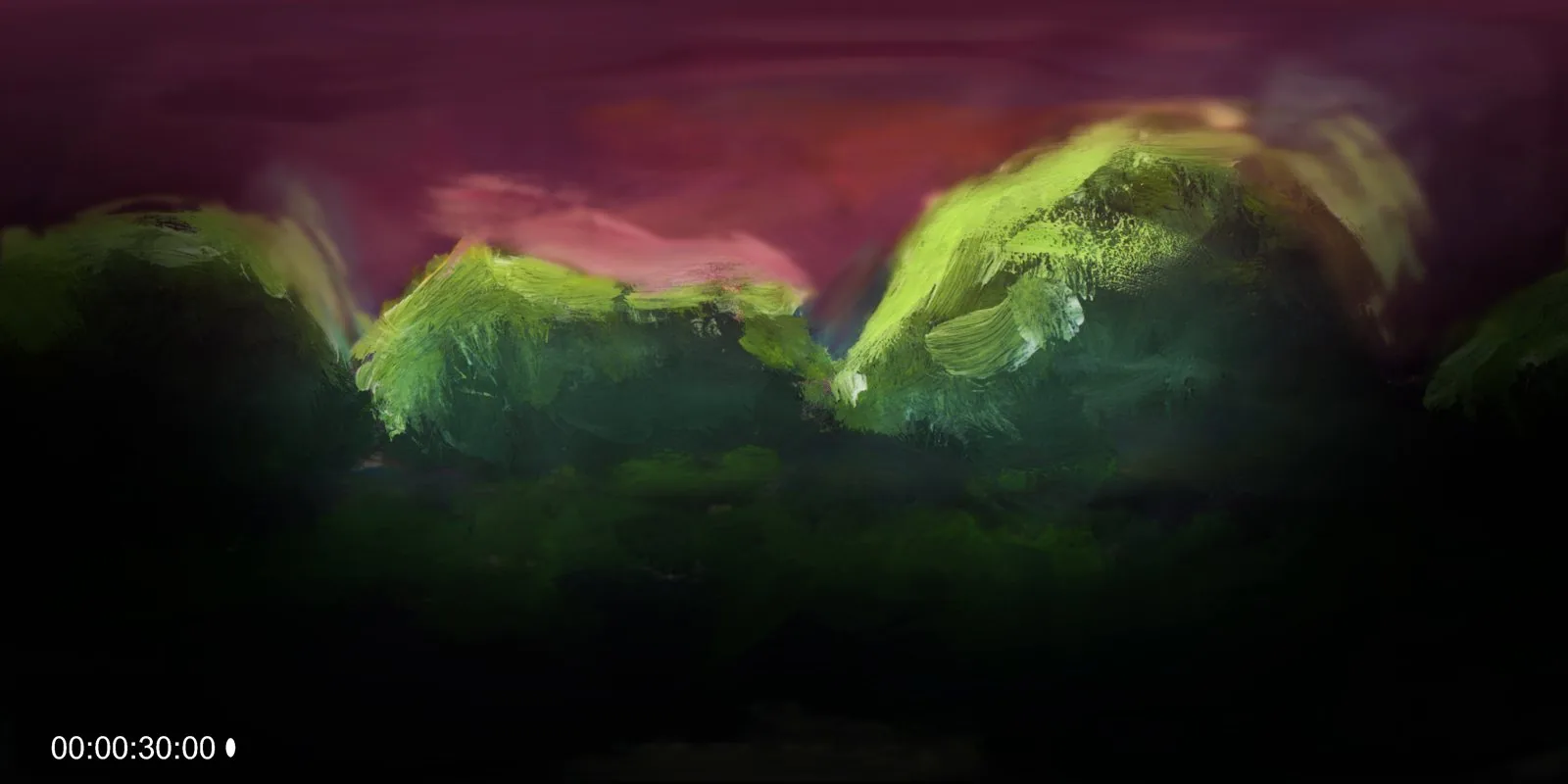
360 frame from the final edit: hills painted in green and yellow against a purple sky, with the ground in shadow
Mountains in the composited edit, at 4096 × 2048 and 24 frames per second.
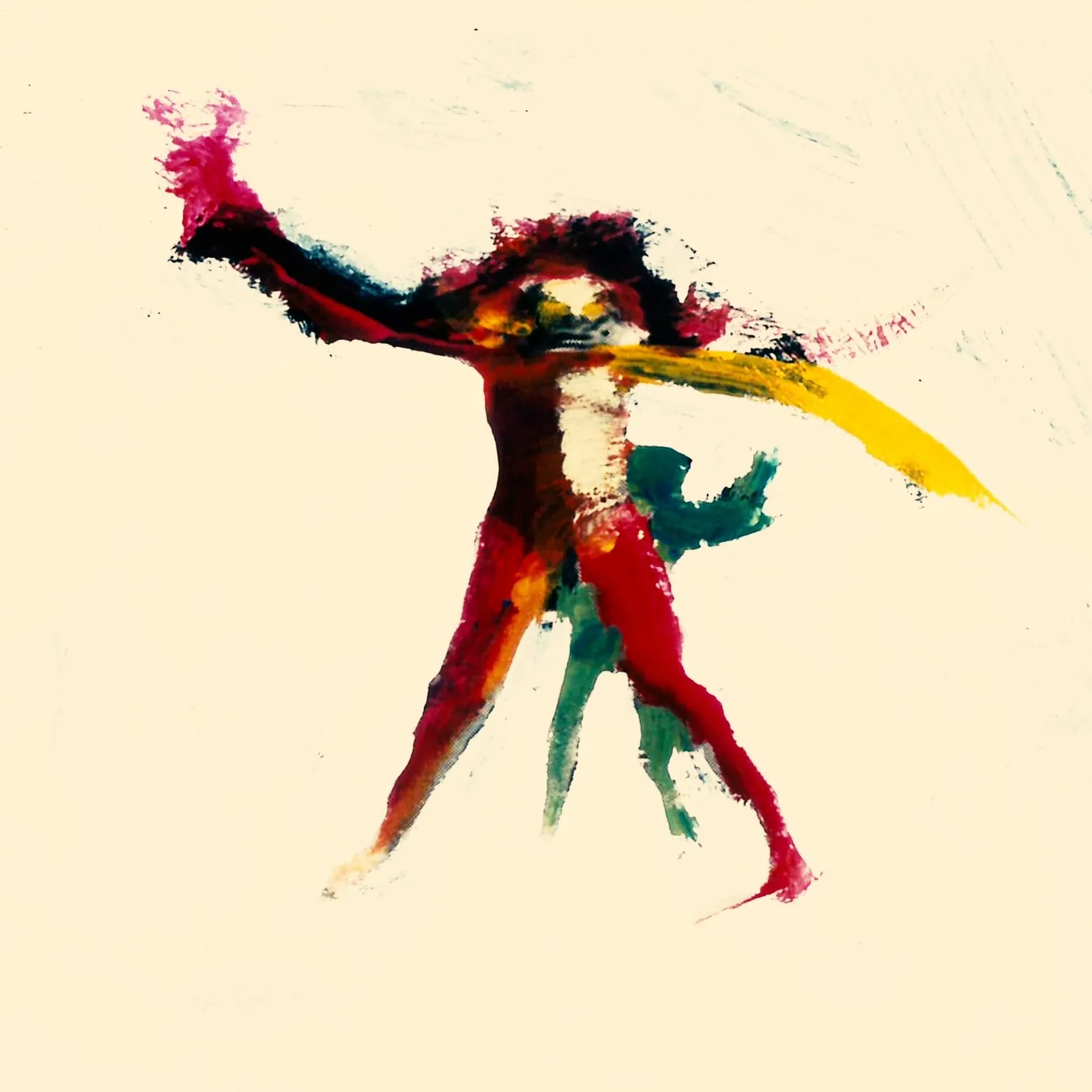
Human figure painted in red, black and yellow strokes on a cream background, arms open
Painted rotoscope test for the virtual reality version.