Art / Work
Ritmos entre líneas: el tren en Colombia
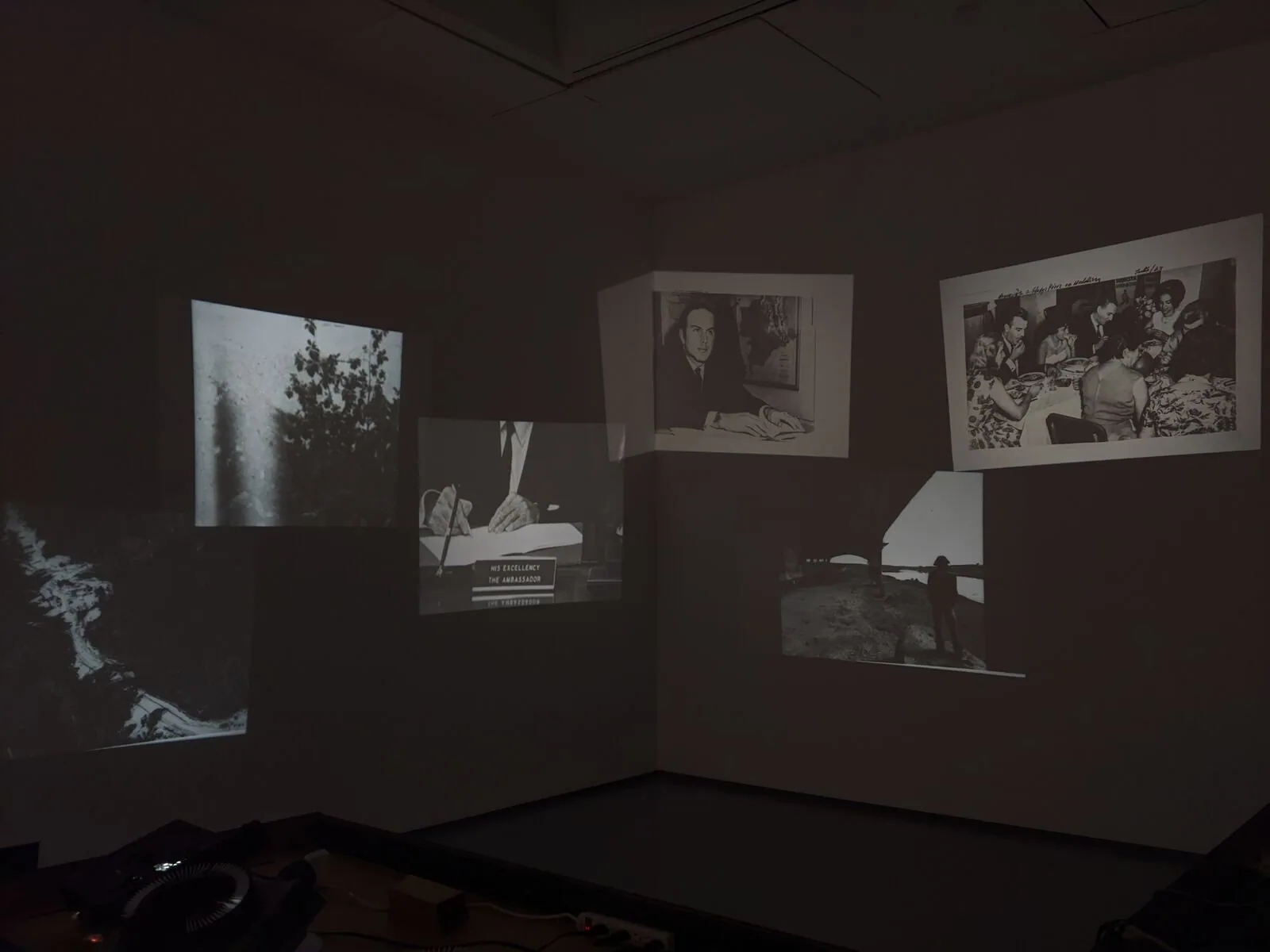
Installation with nine slide projectors and a photographic archive of the railway
- Year
- 2023
- Role
- Co-author
- With
- Claudia Salamanca Sánchez, Carol Sabbadini Durán, Ana Teresa Arciniegas
- Shown at
- 22nd Festival Internacional de la Imagen, Manizales, 2023
- Tools
- slide projectors (9), Kodak Carousel 4400/4600 with LED bulb, black-and-white photographic archive, 35 mm analog camera, Ultrafine 100 film, scanner, Lightroom, Snapseed, Arduino, relays, loop programming
- Links
- Javeriana catalogue of works · YouTube playlist
What it is
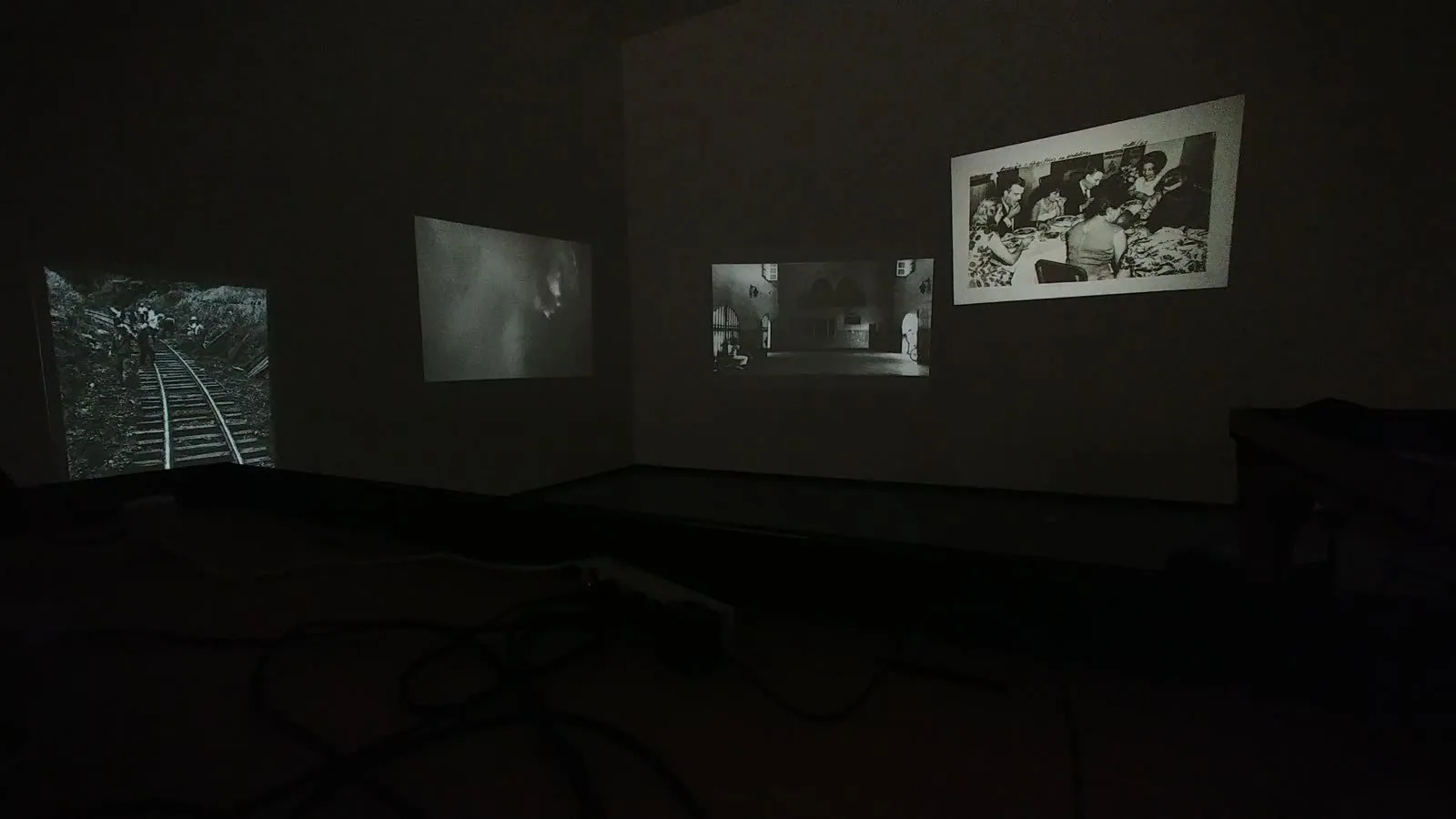
An installation made by four co-authors: Claudia Salamanca Sánchez, Carol Sabbadini Durán, Ana Teresa Arciniegas and me. Nine slide projectors show black-and-white photographs from the archive of the railway in Colombia. They run at the same time, each on its own loop, like nine lines that cross and alternate.
The noise of the projectors is part of the work. It tries to sound like the train running along the tracks.
We asked ourselves how territory is understood and traveled through what the train changed: the landscape transformed by its construction and the social imagination that grew up around it. By spreading the images across nine projectors, the territory stops being read in a straight line. Images and stories cross in a single space.
Archive
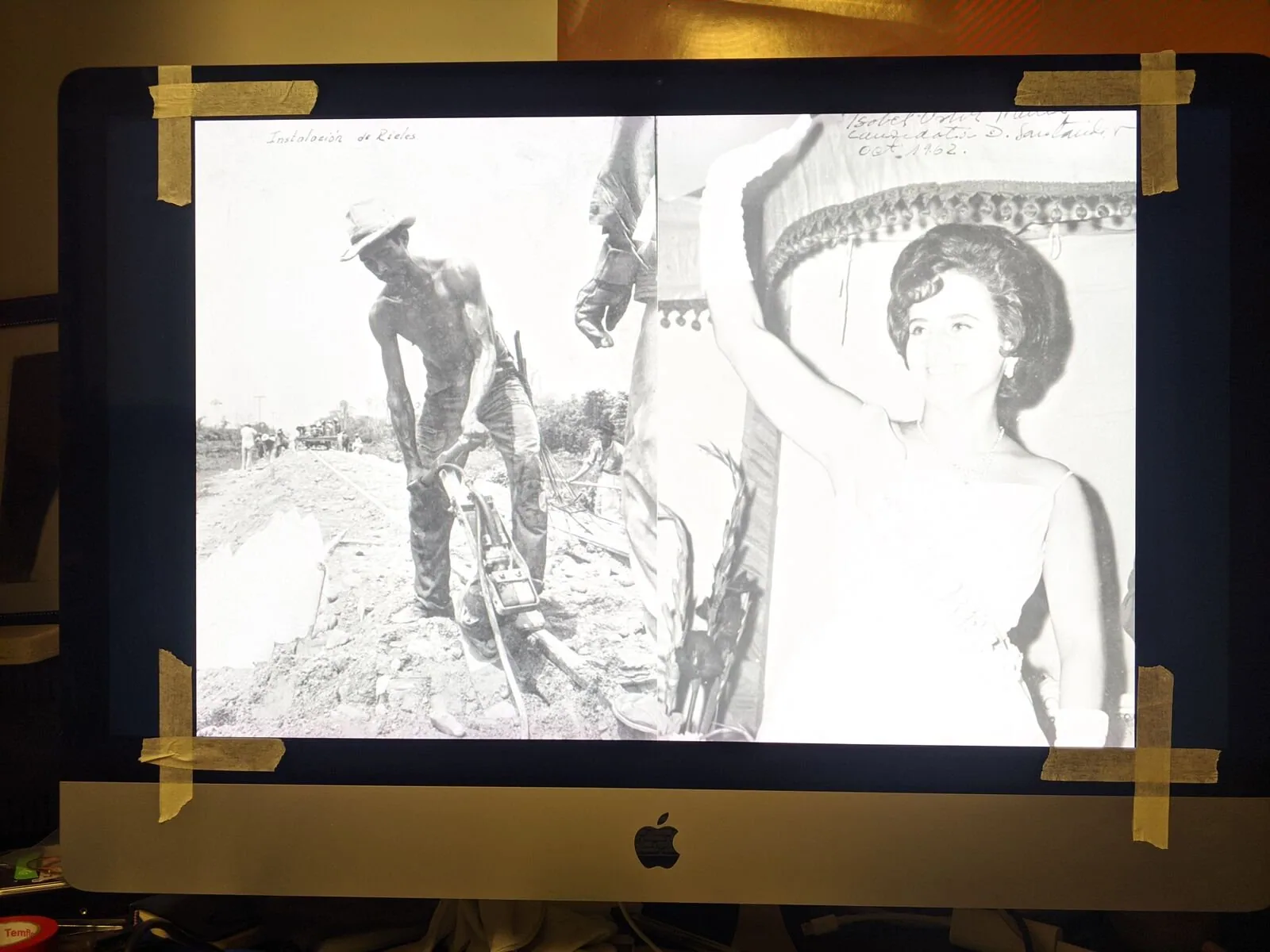
The photographs were found in the storerooms of the Estación de la Sabana in Bogotá, where the Central Railway Station used to operate. They are remnants of the memory of the train in Colombia. We intervened them to open up other narratives about the landscape and how it changed.
The work comes out of research on orphaned audiovisual archives: documents that remain invisible or on the margins of public and private collections. We questioned the categories of traditional archival practice and looked for another way to discuss them through artistic languages, media archaeology, critical studies and audiovisual archive management. We care about how those documents are classified and valued, who has access to them, how they are circulated and how they can be reappropriated.
Lines of work and process
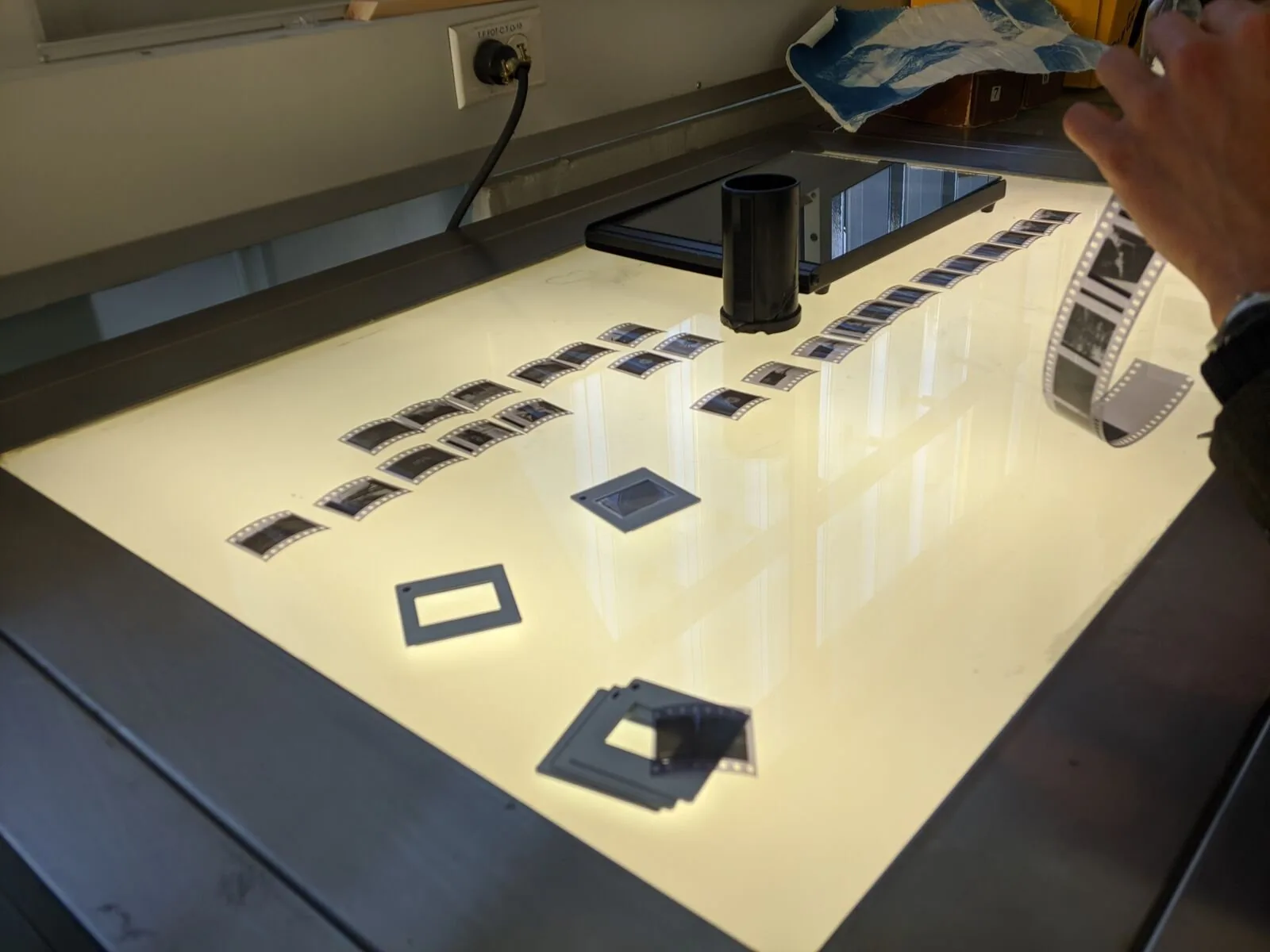
The project was organized into lines of work on the train and on making the slides. Part of the project was researching how slides worked and how they were made.
The intervened photographs are projected as slides on the nine projectors. We programmed them to run in parallel and on loop. That way the sequences cross and alternate, like the routes and journeys of the railway lines.
The process, step by step
I documented the process in a wiki in my Conéctate space, in Notion. This is the short version.
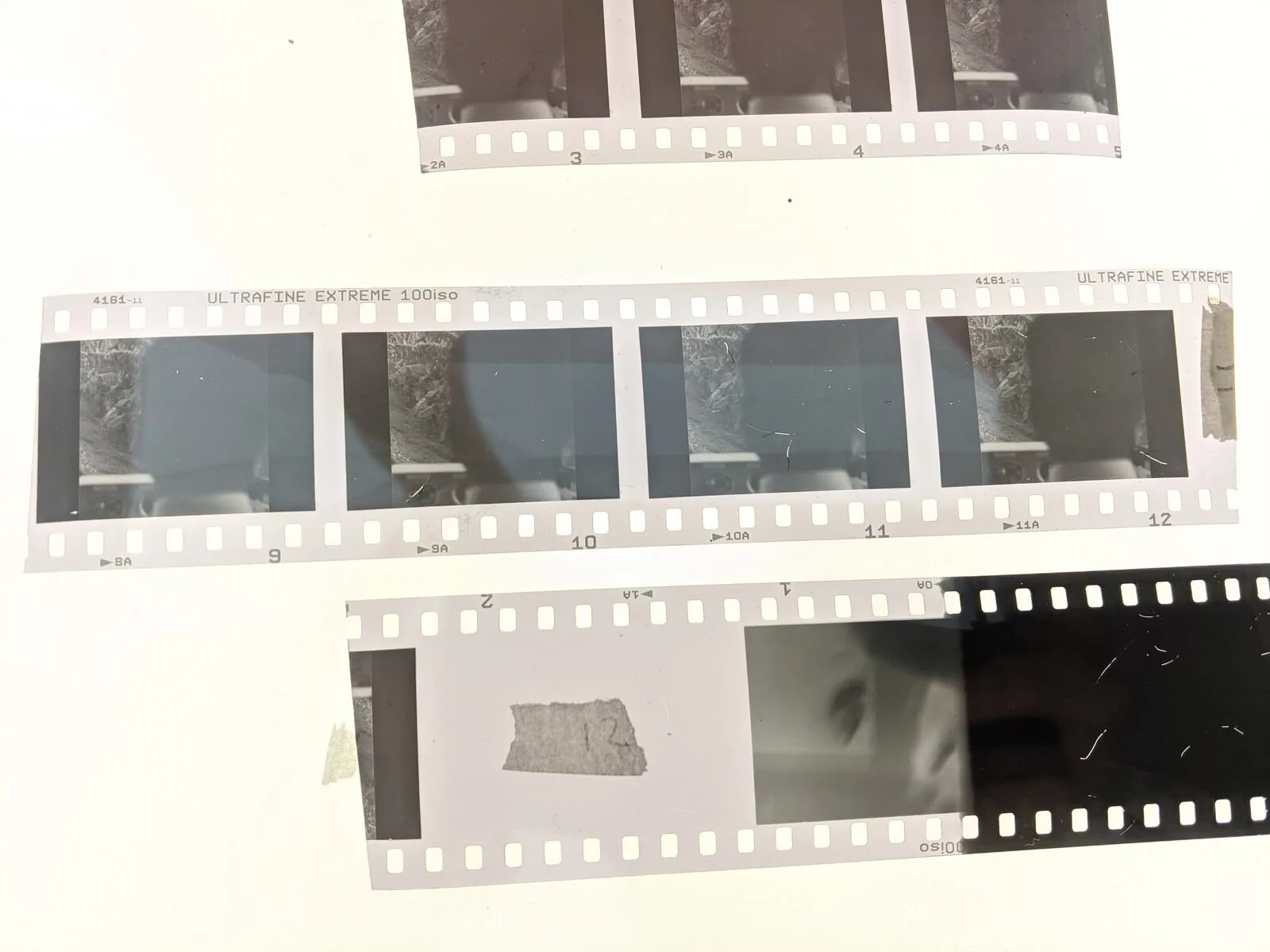
Slides. We scanned the images at 300 ppi or more, as TIFF. We cropped them to 3:2, the proportion of the 35 mm frame, with a black background wherever the photo didn’t fill the frame. We adjusted the tones in Lightroom or Snapseed and left each image as a negative, so it would come out positive on the new roll. Then we rephotographed it from the screen of a 27” iMac at full brightness: 35 mm analog camera on a tripod, 1.8 s, f/4, Ultrafine 100 film. We marked the lens, the floor and the screen so every shot would be the same.
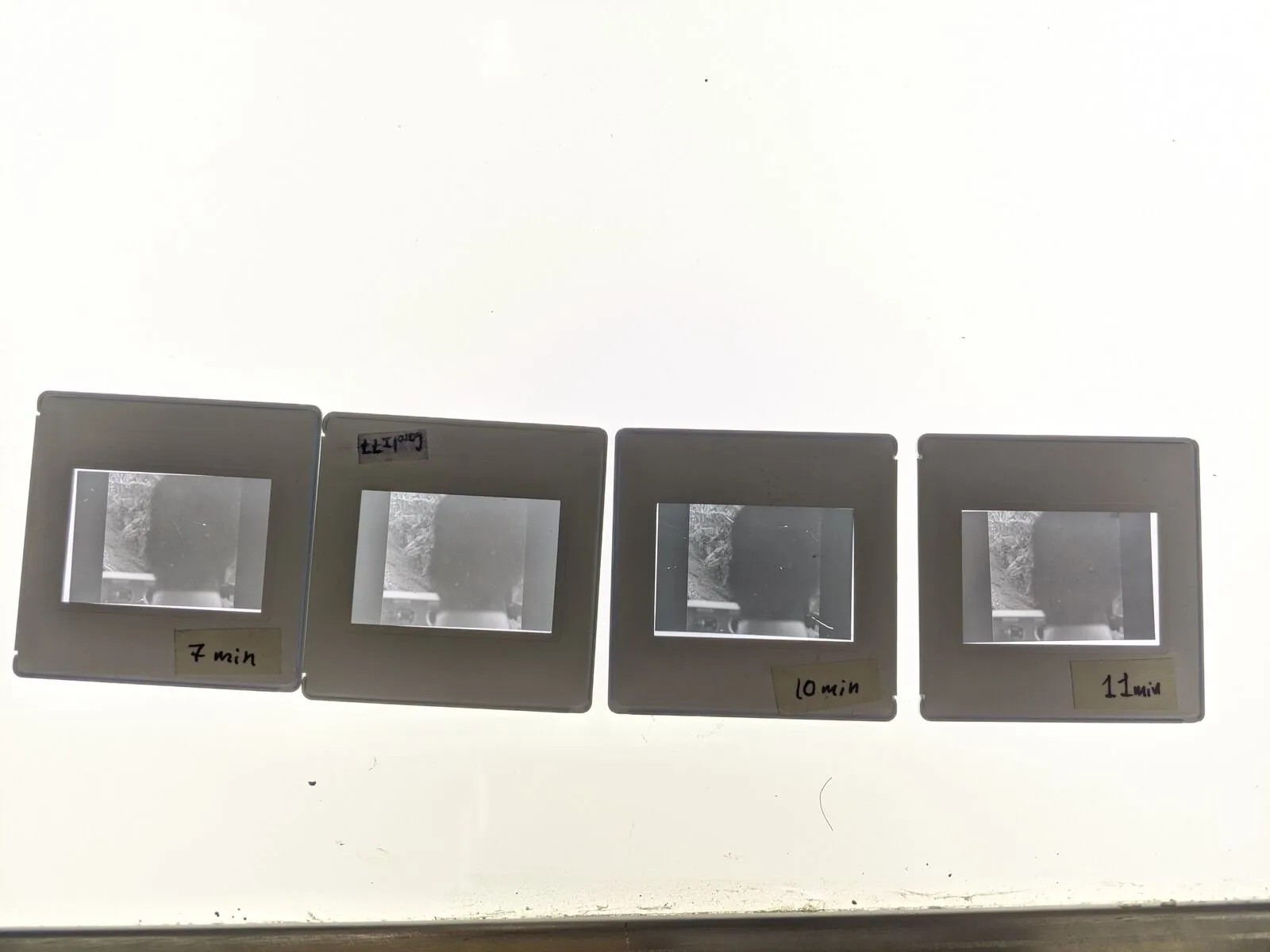
We developed with the university’s chemicals. The reference chart said 8 and a half minutes. We tested 7, 10 and 11 minutes, and in our conditions the best result was 10. A tip from Kinolab: check the development on the text along the edge of the film.
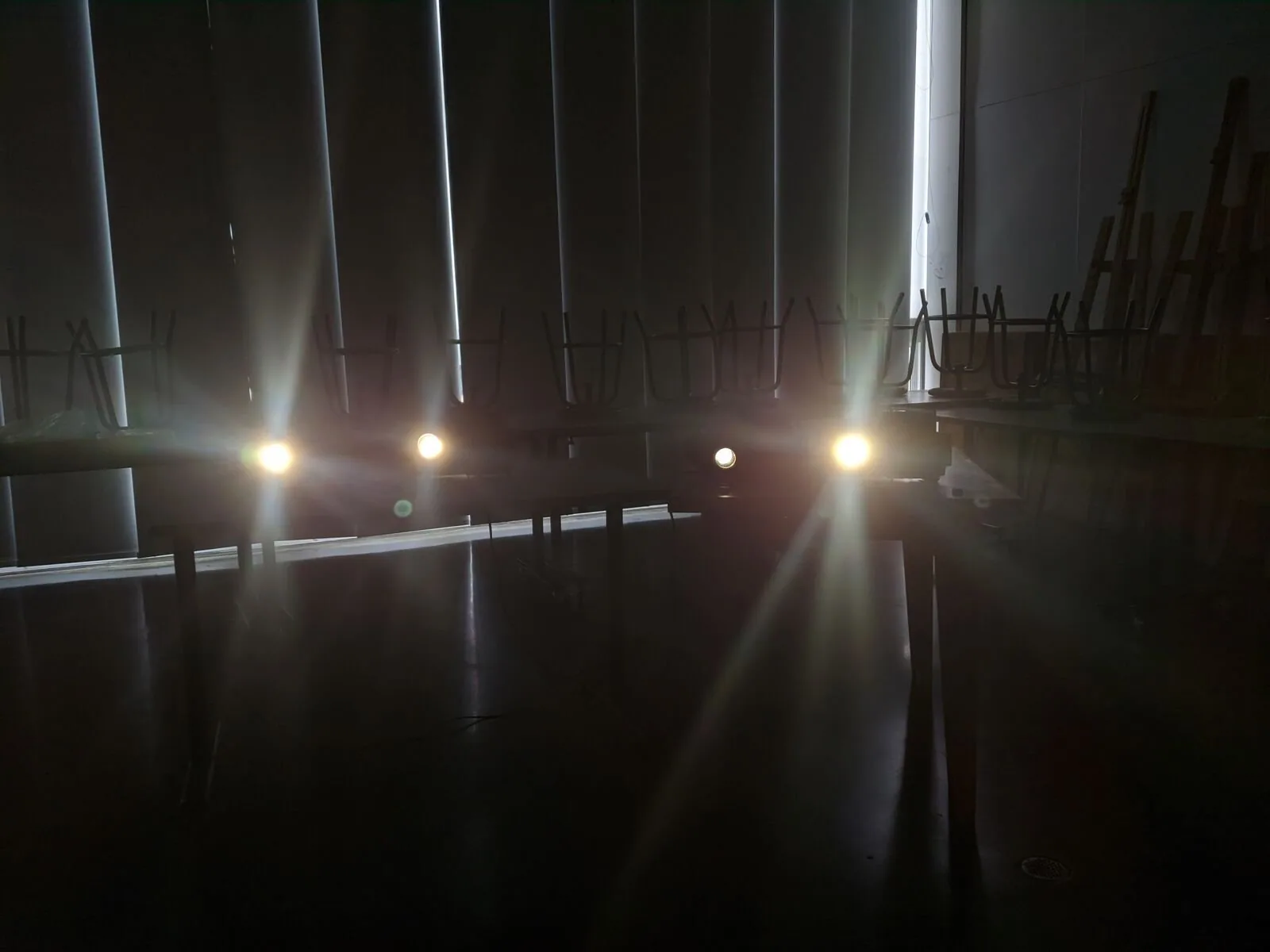
LED projectors. We worked with Kodak Carousel 4400 and 4600 projectors. We replaced the halogen bulb with an LED one: it lasts longer, uses less power and heats the machine less.
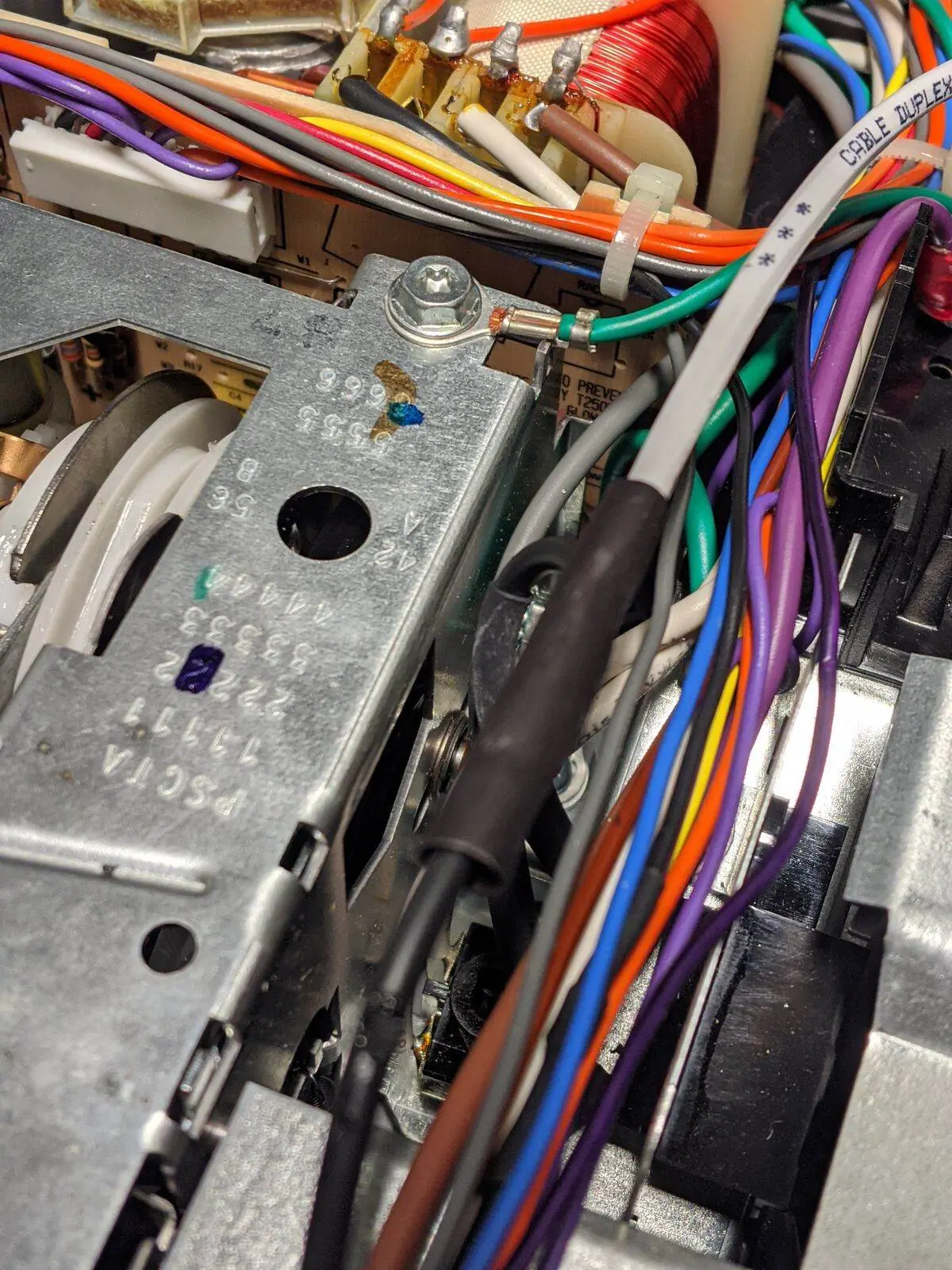
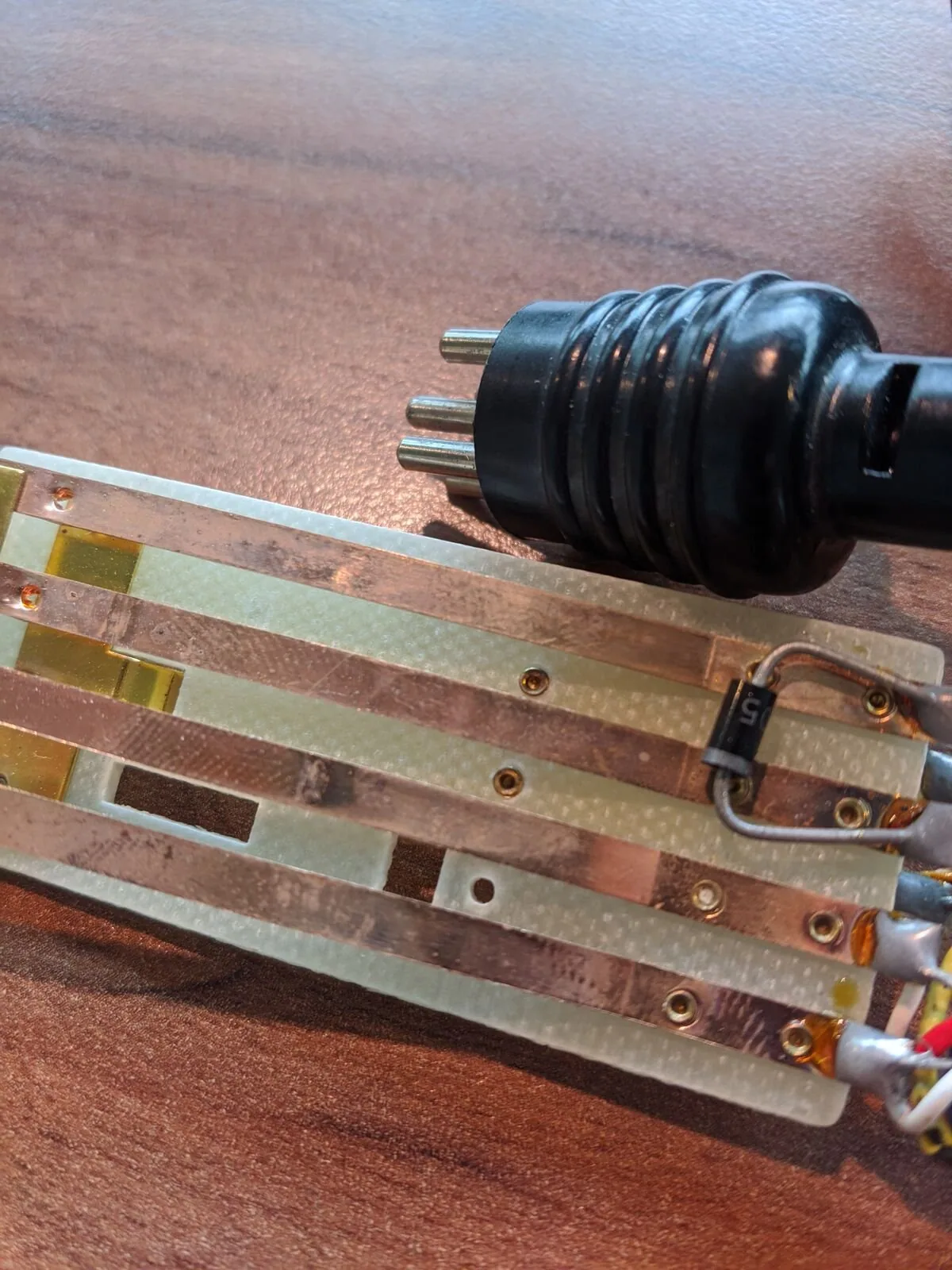
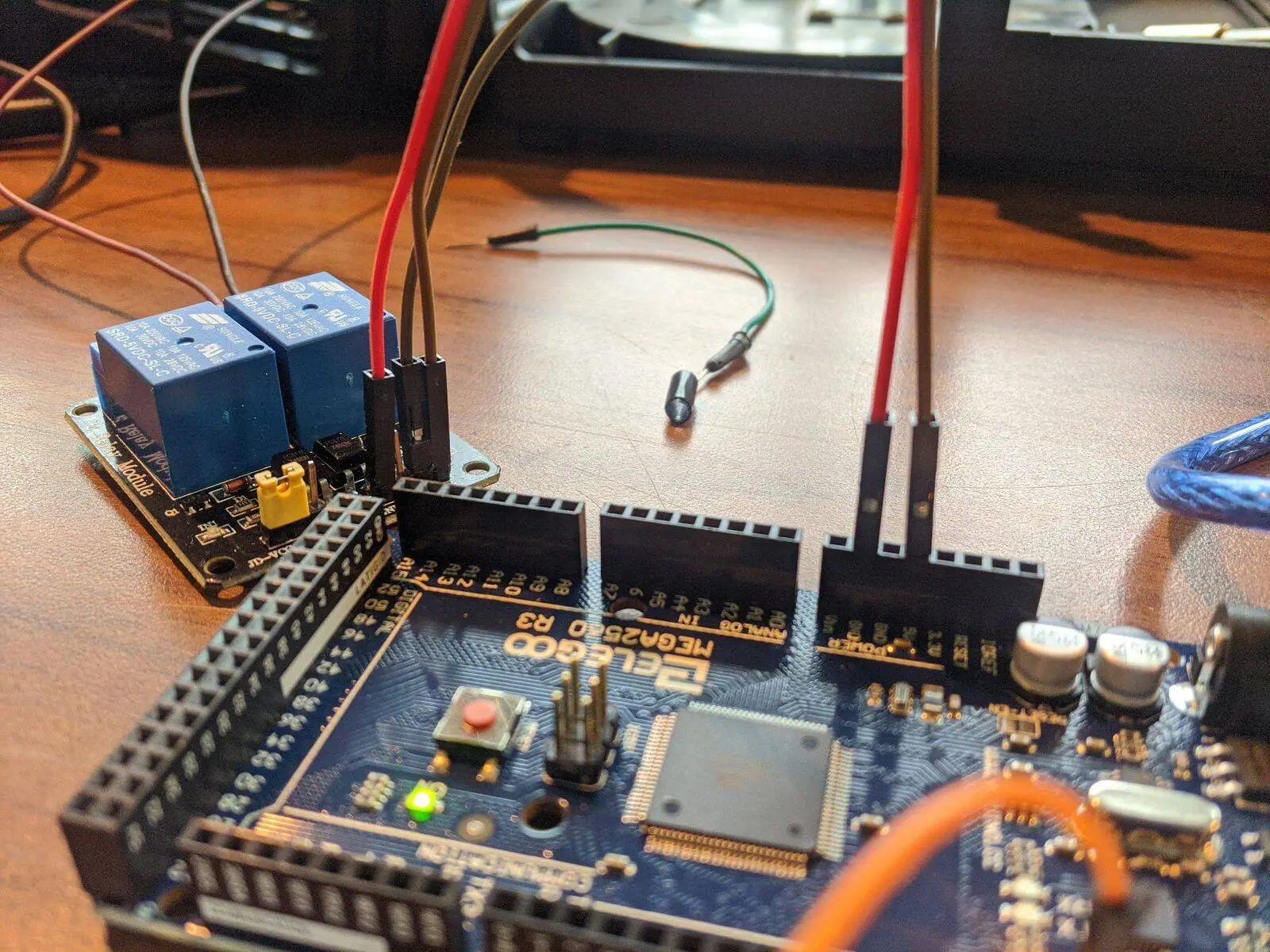
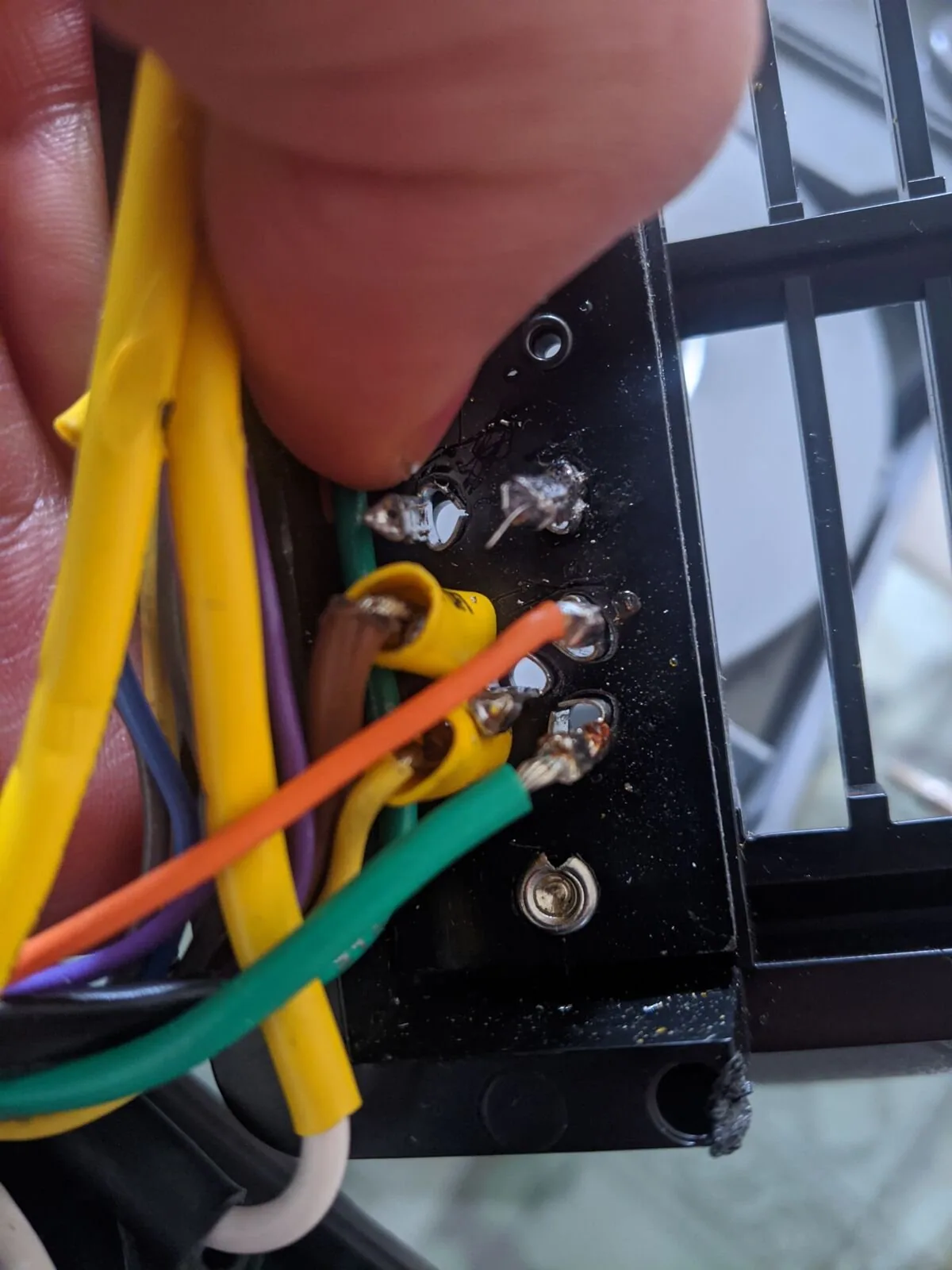
Automation. The projectors are controlled with Arduino and relays, two per projector. One keeps the fan always on. The other turns the lamp on and off every so many turns of the carousel. Slide advance goes through the remote control connector: three of its pins are enough to go forward and back.
It didn’t work the first time. On May 5, 2023 we swapped the connectors on one projector and the remote couldn’t take the bulb’s voltage. There was a short circuit. Since then that current always goes through a relay. On May 9 we set a color code for the wires: brown for the fan (35 V), white for the bulb (120 V), green to go back, orange to go forward. We also set ourselves a condition: anyone should be able to operate the projectors after installation.
The sound of the train. Each projector advances every 3 to 5 seconds. The signals are staggered from one projector to the next, so the changes chain together in under a second and the noise of the mechanisms repeats the movement of the train.
Credits
- Co-authors: Claudia Salamanca Sánchez, Carol Sabbadini Durán, Ana Teresa Arciniegas and David Vega.
- Development: support from Kinolab and from Nelson Fabián Gómez Sichaca with the timing tests.
- “Obras resultado de proyectos” collection (works resulting from projects), Department of Visual Arts, Pontificia Universidad Javeriana (catalogue of works).
- 22nd Festival Internacional de la Imagen, Manizales, May 27 to June 8, 2023.
- Videos: YouTube playlist, 25 videos.
Gallery